← Home
Technology

Technology, surface and control

Explore the production techniques behind cavity dimensions and the smallest tread details.

3D scanning and design
01 / 06

3D scanning and design

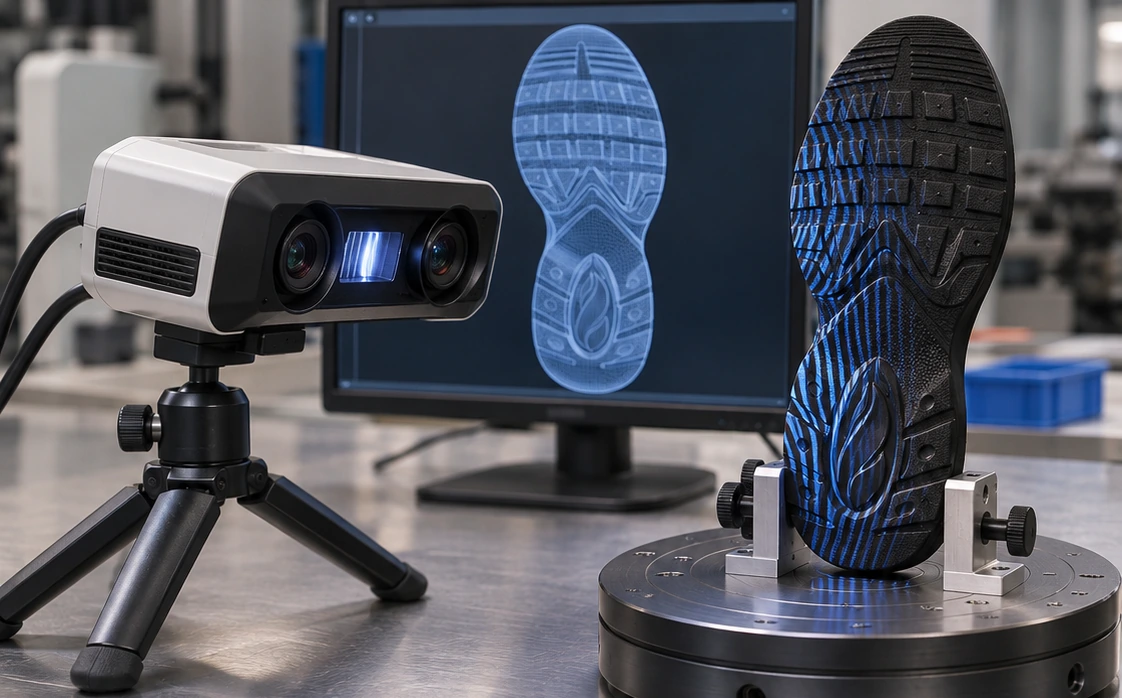
Scanning digitises the sample surface. Reference planes align this capture with the technical drawing.

Toe, waist and heel sections are examined separately. Wear marks in the point cloud are distinguished from design features before checking left-right correspondence.

  • Point-cloud alignment
  • Section and curve checks
Process
SLA 3D model printing
02 / 06

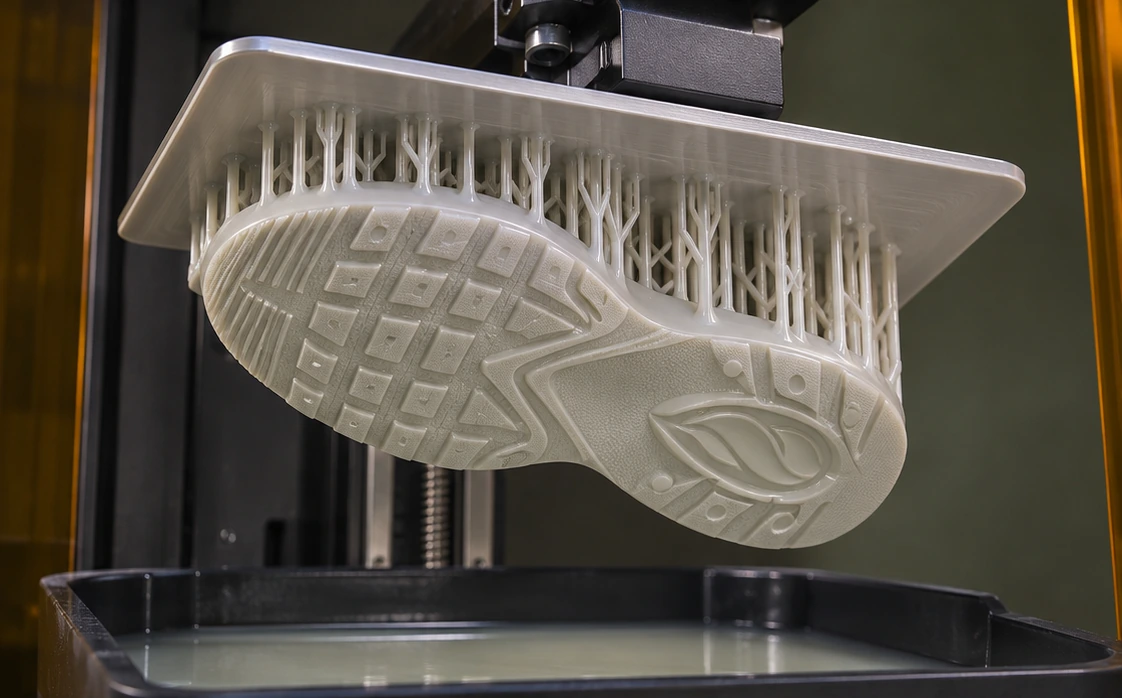
SLA 3D model printing

In stereolithography, light selectively cures a photosensitive resin.

Build orientation influences the direction of layer marks and support placement determines contact marks. Visible tread and fine edges guide support positioning.

  • Build orientation
  • Support contact points
Process
Silicone and plaster preparation
03 / 06

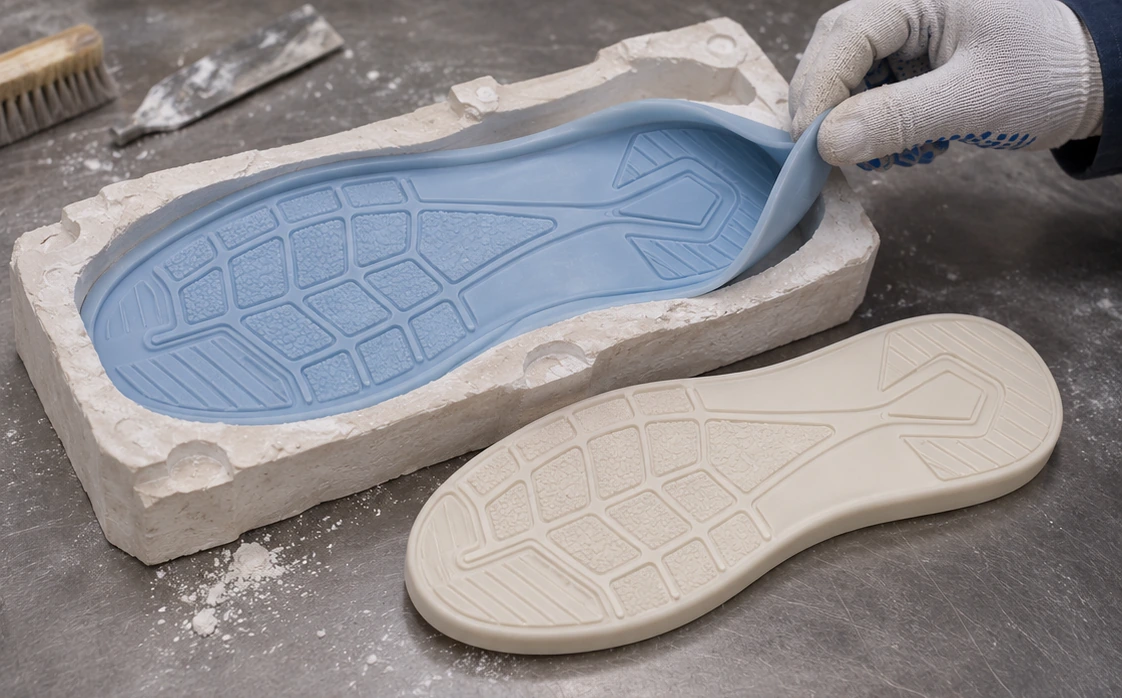
Silicone and plaster preparation

Flexible silicone captures relief in negative. Plaster forms a more rigid copy from that impression.

Air trapped at the bottom of a deep groove can interrupt surface reproduction. The release direction is planned to protect delicate relief during removal.

  • Negative and positive surfaces
  • Air-mark inspection
Process
Casting
04 / 06

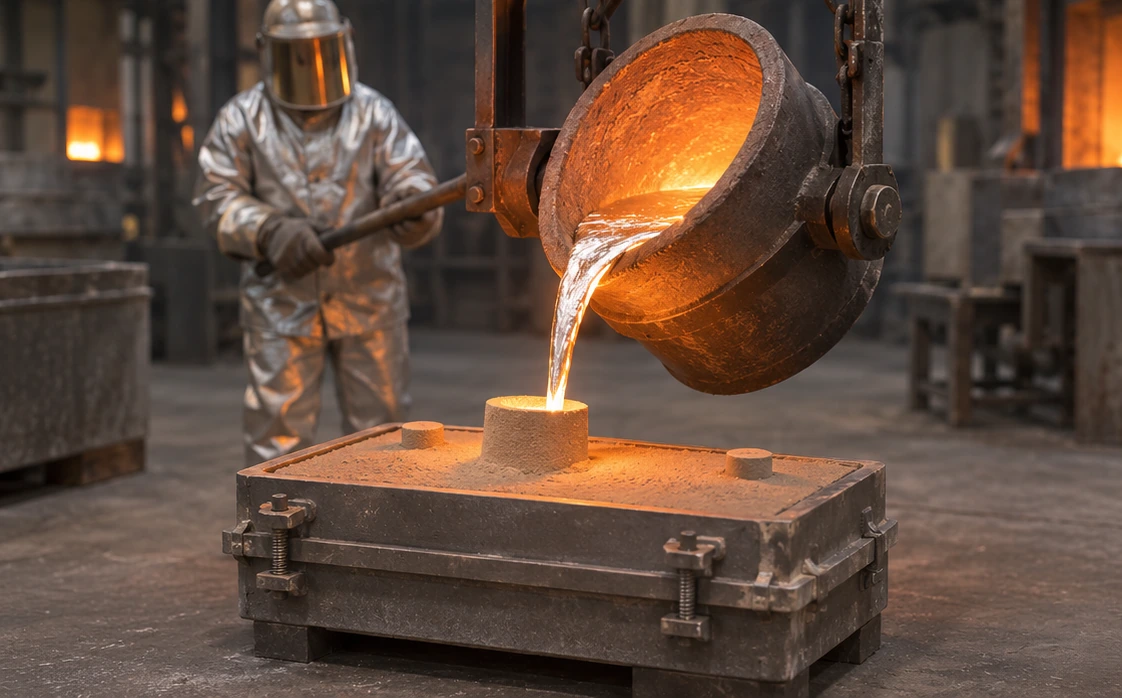
Casting

Casting considers both metal flow into the cavity and the order in which sections solidify.

Feed paths and changes in section affect narrow-zone filling and cooling of thicker regions. Machining allowance is left on faces that will be cut later.

  • Feeding and solidification
  • Machining allowance
Process
CNC machining
05 / 06

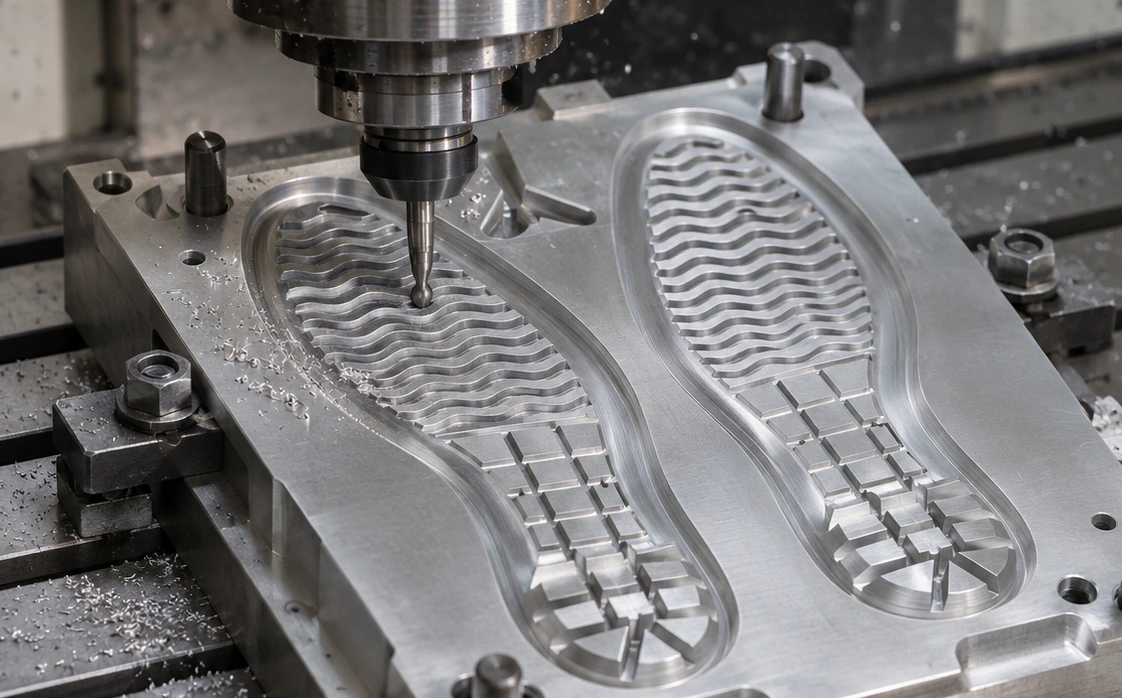
CNC machining

The CAM toolpath determines the cutter’s approach direction and the spacing between passes.

Fixturing and datum setting locate holes and closure faces on the casting. In narrow internal corners the achievable radius depends on cutter diameter.

  • Fixturing and datum setting
  • Cutter diameter and toolpath
Process
Fine surface finishing
06 / 06

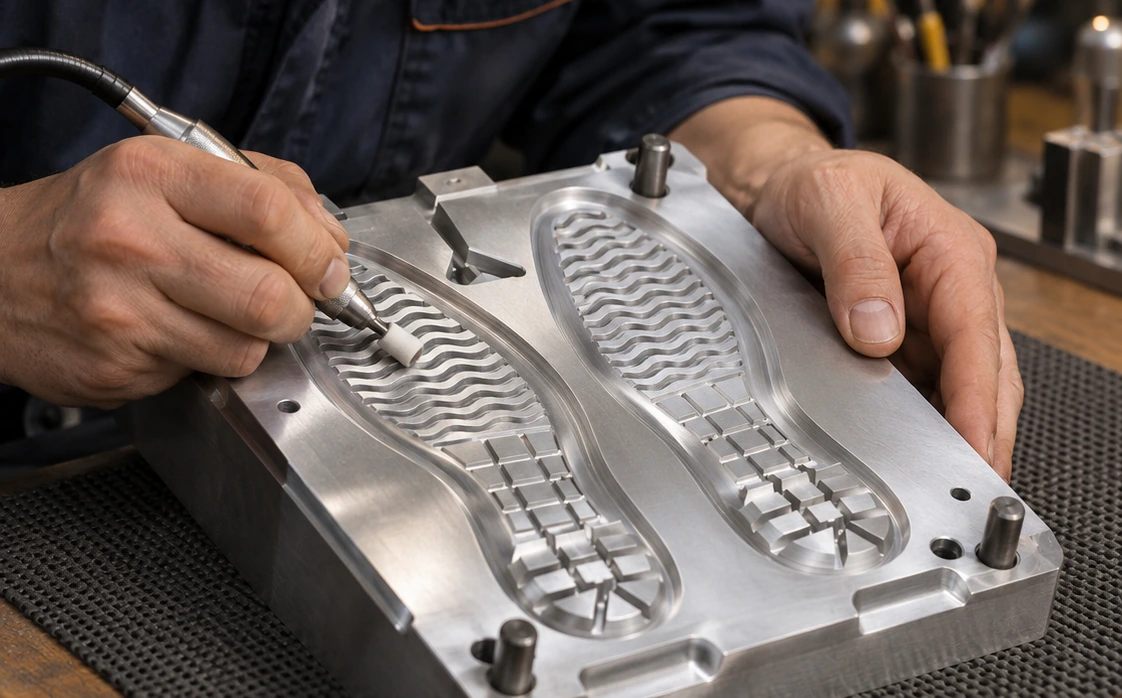
Fine surface finishing

Hand dressing and selective polishing remove machining marks while preserving tread definition.

Side lighting reveals fine marks and transitions. A textured face and a plain edge can be finished with different tools to avoid rounding the relief.

  • Selective polishing
  • Tread-edge inspection
Process

Have a model in mind? Let’s look at it together.

Start your project